FOR WOMEN LEADERS WHOSE RESULTS SPEAK LOUDER THAN THEIR TITLE
You outperform, you say yes to more, and you still end up explaining your value. Too Human To Ignore gives you a proven five-part system that you run inside the 1-on-1s and team meetings already on your calendar, so you and your team rise together.
"Working with Lindsay taught me to believe in my value in a way I couldn't reach on my own. I started helping my team the same way, and the results are benefiting everyone and our department's numbers."
"As a seasoned leader, I have taken a lot of training in leadership. Lindsay's system is the first instance where leaders at every level take practical action steps to learn not just why, but how to lead with empathy and understanding."
Have you ever wondered why being great at your job hasn't made you the obvious choice for the next step up?
You took the extra project. You covered the gap nobody else wanted. You earned the credential. And still, you're in the same seat.
One client put it to me this way: "I have more ideas than I have hours in the day. I've given this everything, and I'm still not being recognized."
She's not alone. A study of nearly 30,000 employees at a large North American retail chain found that women received higher performance ratings than men, yet were rated lower on potential and were less likely to be promoted. Their high performance was seen, yet it still wasn't enough to prove they were ready for more.
If this sounds familiar, nothing about you is broken. Working harder was never going to close this gap. What's missing is a system to put what you already have to work.
YOU DON'T HAVE A SKILLS GAP. YOU HAVE A DEPLOYMENT GAP. THE EMPATHY, PRESENCE AND JUDGMENT YOU ALREADY CARRY HAVE NEVER BEEN PUT TO WORK INSIDE A SYSTEM BUILT TO PRODUCE REAL, MEASURABLE RESULTS
Maybe somewhere in you there's a belief that goes like this: if I just work hard enough, someone will notice.
It's a reasonable belief, and plenty of workplaces reward it early on. It feels safe because it asks nothing of you except more of what you already do well.
It also keeps you exactly where you are. Recognition runs on visibility and sponsorship, and on a system that produces both. More effort only proves a competence nobody was questioning. Bain & Company found that after two or more years in the workforce, women's ambition drops by more than 60% and their confidence by roughly half, while men's stay essentially unchanged. Same buildings, same work. That erosion has almost nothing to do with ability.
Another certificate raises a bar that someone else still decides you've cleared. Volunteering for every project wears you down without guaranteeing anyone notices. Getting into the room gets you proximity, and proximity on its own converts into very little.
Companies respond with the fix that's easiest to announce: a mentorship program on paper, a panel on women in leadership, advice to speak up and negotiate harder. The whole burden lands back on you, with no framework underneath it.
Meanwhile, the deeper pattern keeps running. In 1977, sociologist Rosabeth Moss Kanter documented how leaders promote the people who remind them of themselves. It's rarely conscious. Nearly 50 years later, women still hold just 29% of C-suite roles. And the Chartered Management Institute found that 82% of managers start their first leadership role with no formal training at all. Most leaders are handed the title without a map. Women are then measured against a model that was never built with them in mind, and told the gap is theirs to close. So they work harder. They stay later. They earn one more certificate. And still, nobody sees their real value. Quietly, they start to wonder if the problem is them.
It never was.
In 2008, eight months after starting as a ground-floor technician, with no corporate background and no management training, I was handed one of the highest-profile properties in Toronto. The manager before me had walked out. The contract was close to being cancelled. Two months in, the recession hit.
Every leader I could study was a man, so I copied what I saw. Bravado. Certainty I didn't have. My team read straight through it and went quiet.
So I called them together and said the sentence that frightened me more than anything I've said as a leader: "I don't have all the answers. I need yours."
They leaned in. They brought me problems I didn't know existed and ideas I'd never have had. We grew revenue by more than 100% by 2009, while the rest of the sector lost money.
That was the beginning. For years, I built on that lesson, refining it on the hardest teams I was handed, and the promotions followed, all the way to the top 200 executives at the largest company in my industry worldwide.
But the higher I climbed, the bigger the rooms got, and I felt the pull to play small. I stayed quiet and covered the difference with hours, until burnout cost me two years away from corporate life. I came back knowing two things: no leader should carry everything alone, and leading as anything less than myself was never sustainable. I promised I'd never play small again.
I wrote this book because more women belong in the highest leadership roles, and because every team deserves a leader who puts people first. Everything I learned is in here, in order, so you don't have to spend 19 years finding it.
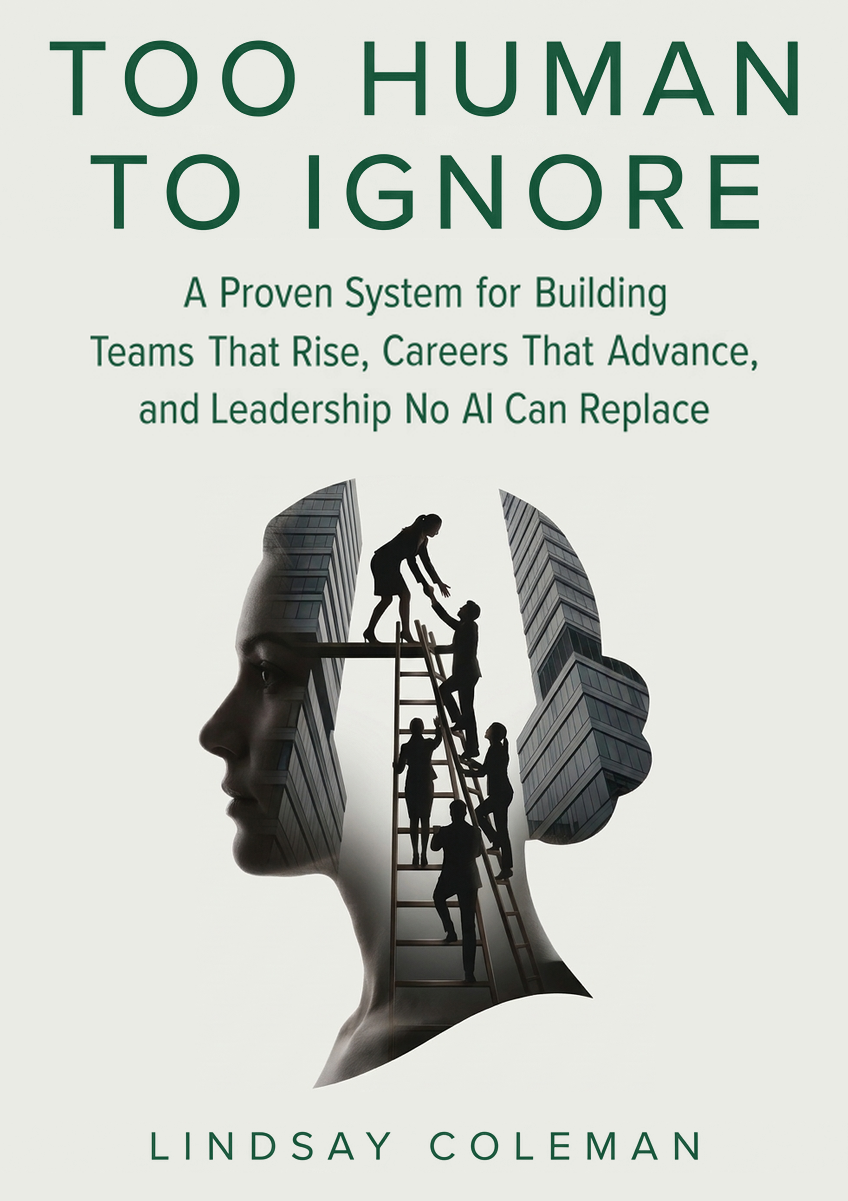
When you run the skills you already have inside a clear system, your team starts delivering, the people above you start paying attention, and someone with real influence starts saying your name for you.
It works because of what I call the External Mirror. You're almost always more capable, more ready and more valuable than the story you've been telling yourself, because you've never seen yourself the way the people around you do. Once you can, you start reflecting that belief back to your team. Trust isn't earned through performance. It's created through investment. The leader who goes first, who invests in her people before they've proven anything, is the one whose team rises.
These instincts are only gaining value. In a study of 55,000 professionals, Korn Ferry found that women score higher than men on 11 of 12 emotional intelligence competencies. The World Economic Forum's 2025 research placed empathy and active listening among the skills generative AI is least able to replace. They were never the soft skills. They were the mechanism.
The step-by-step method inside Too Human To Ignore. You're already delivering results. This system turns the instincts that got you here into three things that results alone haven't won you. A team that rises: people who feel seen, heard and valued, and who are ready to step into larger roles before you step into yours. A career that advances: vetted champions in the rooms where decisions get made, saying your name with proof behind it. And leadership no AI can replace, built on the empathy, presence and human connection that grow more valuable every year. Nothing about it asks you to become someone else. It asks you to lead as yourself, on purpose.
"Lindsay taught me her Champion Vetting Framework, and it changed how I approached my career. I stopped hoping the right people would notice and started building relationships with the ones who could actually speak up for me. I became a better leader, had more fun doing it, and got promoted because of it. Now it's in her book, and that section alone is worth the price."
"Training two successors has been a game changer. Offloading some of my workload while developing others allowed them to see and work towards a real career path while eliminating burnout for me. I am ready to accept a new promotion and know my team will be in good hands when I do.
"I was promoted into a role I never thought was possible, and it's still paying off for me, my team and my company."
Becky was young for her role, leading her very first team, and she was genuinely good at it. She had ideas that could have shaped how her entire region operated, but nobody above her asked. So she made herself smaller, stayed in her lane, and waited to be discovered.
Together, we built her Ignored Inventory, everything she'd done to get noticed that went nowhere, and her Unfair Advantage Inventory, everything she knew and had quietly solved that leadership had never heard about. Once she could see her value clearly, I taught her simple conversation starters to let the right people know, without it ever sounding like bragging.
Soon she was invited into think tank sessions with the Regional VP, rooms she'd never been considered for. She went from Director to Head of Production at head office, and she's still a client of mine today. The gap was never her ability. Nobody had handed her a way to make it visible.
Jennifer, operations. She was quietly planning to leave because she couldn't picture a future where she was. I noticed she was a natural with clients and paired her with a Sales Manager who'd move up once she stood on her own. She became Sales Coordinator, then Sales Manager, and is now a Sales Director with another company.
Kristine, technician. Her older male peers weren't taking her seriously. We deepened her technical skill and worked through many honest 1-on-1s until she could see what I saw. She became Team Lead, then Operations Manager, and is now a Production Manager elsewhere.
Erin, Sales Coordinator. Leadership wanted her exactly where she was because she was good at it. Through the same shadowing arrangement, she became Sales Manager, then Regional Sales Manager, and has since moved overseas with the largest company in her sector globally.

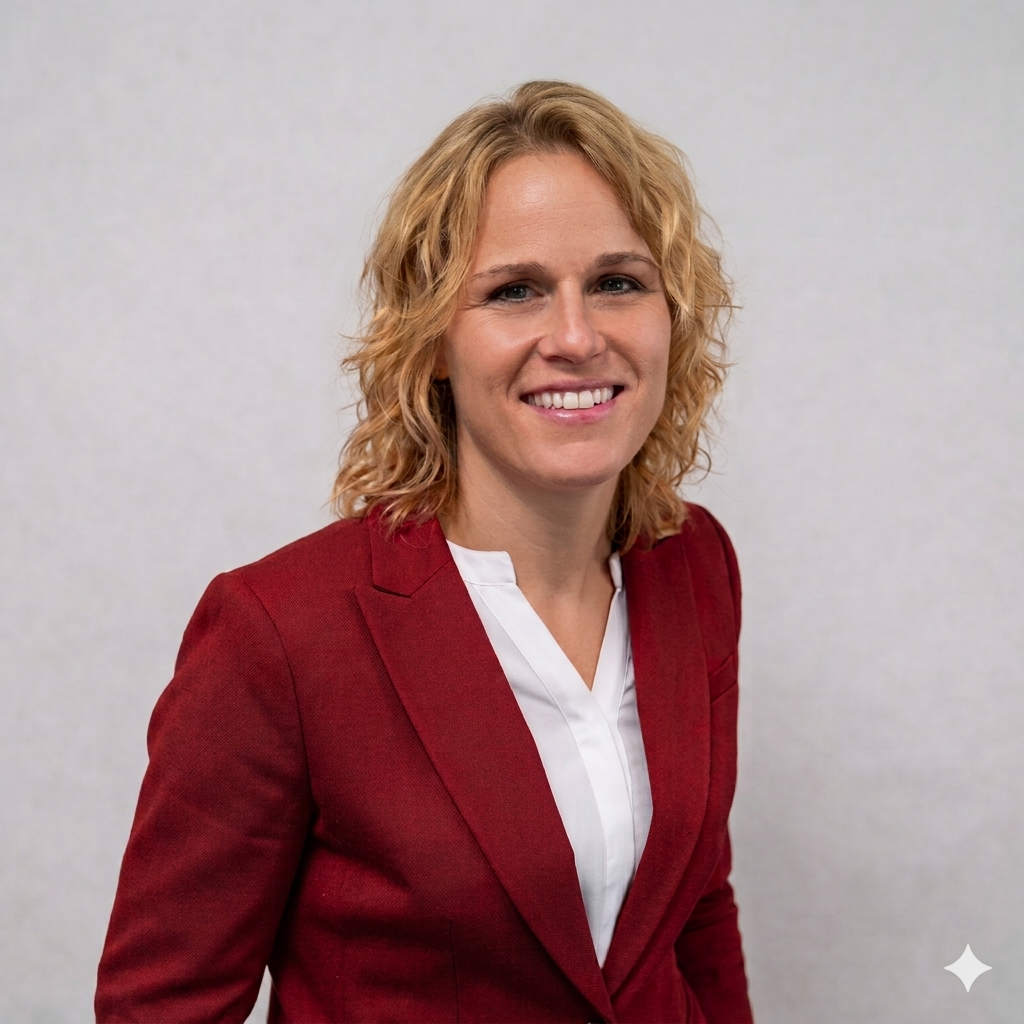
At 29, with no university degree, no management experience and no interest in corporate life, Lindsay was handed her first team as Director of her company's highest-profile location in the region. The previous leader had walked off the job, the team was in disarray, and the client had been threatening to cancel for months. With no time to settle in as a young woman leading in a male-dominated industry, she abandoned the leadership styles she'd been trying to copy and found her own, and it worked. Those lessons sparked her dedication to building, deploying and refining human-centered leadership practices that create teams that rise, driving both her own repeated promotions and stronger company results. Now, as AI reshapes workplaces around the world, empathy, perspective and human connection are becoming the capabilities organizations need most, and leaders who practice them have never been more valuable.
Over the years that followed, she became known as the leader companies handed their most difficult teams and at-risk contracts. She held director roles in sales and operations, eventually becoming Director of Strategic Accounts with a portfolio of 52 locations across North America, and joining the top 200 executives at the largest company in her sector globally by the age of 40.
Lindsay's mission is to help women leaders reach their highest career goals while developing more human-centered leaders across every industry.
When she's not coaching high-performing women one-on-one, you can find her writing, singing and performing music, hiking with her dog, Jax, on the trail by the lake, or planning her next travel destination with her partner.
Imagine your next review. You arrive with a page of evidence in your own handwriting. Someone with influence has been mentioning your name for months. Your team handles the day without you, and you can choose between two people from your own team ready to step into your seat.
The promotion stops feeling like a fight and starts feeling like the next step everyone already expected. You get there as the leader you already are.
Right now, there is someone on your team with an idea they haven't said out loud, and a future they can't quite picture for themselves. They're waiting to find out whether this is the kind of place where ideas get heard and futures get built. They'll learn the answer from you. Make sure it's yes.
A proven five-part system for building a team that rises, a career that advances and leadership no AI can replace, using the instincts you already have.